TRI-County COMMUNITY HEALTH REPORT

TRI-COUNTY COMMUNITY HEALTH REPORT

Understanding what shapes health and well‑being across Calumet, Outagamie, and Winnebago Counties in Wisconsin.

The Tri-County Community Health Improvement Coalition has released the first-ever shared Community Health Report for our region. The 2025 report brings together data, community voices, and lived experience to better understand what shapes health and well-being across Northeast Wisconsin.

What the report shows

Health outcomes are driven by access to vital conditions, not just health care. Wealth inequality is a major root cause of health disparities. Housing, child care, transportation, education, and basic needs all matter. Collaboration across communities and sectors is essential.

The Tri-County Community Health Report was created by five public health agencies, four health systems, and more than a dozen nonprofit partners. This unified assessment is designed to help the tri-county region better understand the conditions that shape health, not just the outcomes, and to build a foundation for coordinated action.

What this report provides:

  • Shared data and trends across Calumet, Outagamie, and Winnebago Counties
  • Insights drawn from community voices, listening sessions, and partner input
  • A framework grounded in the Vital Conditions for Health & Well-Being
  • Root-cause analysis emphasizing the role of wealth inequality in health outcomes
  • The evidence base for the region’s next Community Health Improvement Plan (CHIP)


Why this matters for our region:

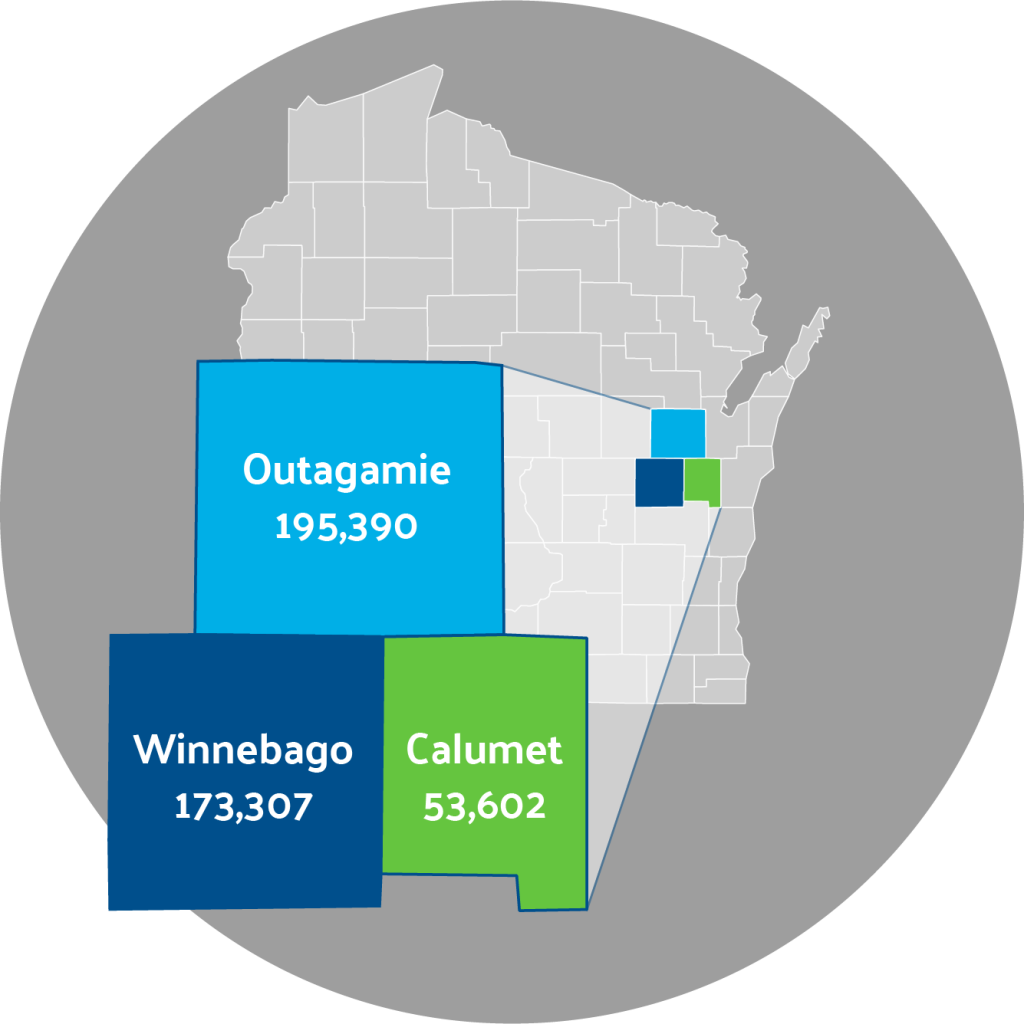
  • Nearly 500,000 people live in the tri-county area, moving across communities daily
  • Community challenges—and opportunities—extend beyond jurisdictional boundaries
  • Health is shaped by where people live, work, learn, and belong, not just medical care
  • The report identifies key opportunities for regional action, including:
    • Mental health
    • Belonging & civic muscle

Outagamie, Winnebago, and Calumet Counties with populations.

Key Findings at a Glance

Wealth Drives Health

Income consistently predicts access to housing, food, child care, transportation, and stability, making wealth inequality one of the strongest root causes of health disparities in the region.

Housing, child care, and transportation are health issues

These essential conditions shape families’ ability to work, access services, and maintain stability. Rising housing costs, limited child care availability, and car‑dependent transit systems create barriers that affect physical, mental, and financial well‑being across all three counties.
Belonging is Low

Less than half of adults in the Tri‑County region report a strong sense of community belonging, and many youth lack emotional support and connection at school.

Mental Health is the #1 Community Concern

Residents, partners, and youth consistently identify mental health challenges, including anxiety, depression, loneliness, and suicide risk, as the most urgent issue.

Basic Needs are Getting Harder to Meet

Food insecurity is rising, the cost of living is increasing faster than wages, and many families struggle with healthcare access, affordability, and medical debt.

Reliable Transportation is Limited

Fewer than 1% of residents regularly use public transit, and high costs of car ownership leave many families with limited mobility options.

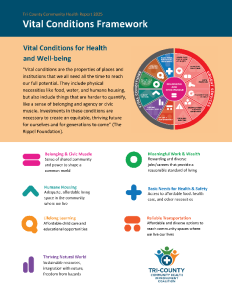
VITAL CONDITIONS FOR HEALTH & WELL-BEING

The Community Health Report is built on the Vital Conditions framework, a comprehensive way of understanding the systems, environments, and opportunities people need in order to thrive. These conditions reflect the essentials of daily life — from our sense of belonging and civic voice, to the stability of housing, to the reliability of transportation, the natural environment, and opportunities for learning and meaningful work. Together, they paint a picture of the broader forces that shape health and well‑being across Calumet, Outagamie, and Winnebago Counties. The downloadable flyer provides a clear, visual overview of each of the seven Vital Conditions and how they influence the long‑term health of our communities.

Vital Conditions Framework

Belonging & Civic Muscle

Meaningful Work & Wealth

Humane Housing

Basic Needs for Health & Safety

Lifelong Learning

Reliable Transportation

Thriving Natural World

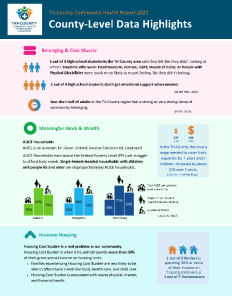
COUNTY-LEVEL HIGHLIGHTS

Each county in the Tri‑County region has unique strengths, challenges, and patterns that inform the overall story of community health. These highlights offer a closer look at key local indicators, including belonging, economic stability, housing affordability, food security, educational attainment, and transportation access. While the tri‑county region shares many trends, the county‑level snapshots reveal important differences and opportunities for targeted action.

County-Level Data Highlights

How this report was created

Community Health Assessment (CHA)

A CHA is a comprehensive process used to understand the health status, needs, and strengths of a community. It brings together data, community input, and local expertise to identify the most important issues affecting health and well‑being across the region.

MAPP 2.0 is a nationally recognized framework that guides communities through collaborative, data‑driven decision‑making. It emphasizes equity, shared leadership, and systems thinking to ensure that priorities reflect both evidence and lived experience.

The coalition reviewed multiple data sources,  including assessments, existing reports, and community feedback, to form a clearer, more accurate picture of the region’s health conditions.

Five public health departments, four health systems, and numerous nonprofit organizations worked together to align data, expertise, and community insight.

More than 130 community organizations responded to partner engagement efforts, helping shape priorities and validate community themes.

What's next

For the Coalition
Next steps include identifying the priority health focus areas that will make up the Community Health Improvement Plan (CHIP). These priorities will be chosen using the information in this Community Health Assessment. As the coalition moves into the CHIP phase, partners will use the assessment to guide coordinated planning focused on strengthening belonging and supporting mental health. Over the next three years, the coalition will set objectives, determine strategies, and create ways to measure progress.
For the Community
Community involvement will continue to play an important role. Residents, organizations, and local leaders can use the findings to inform programs, support local conversations, and stay connected to ongoing efforts. Your participation helps build momentum toward healthier, more connected communities across the tri-county region. Please email us with questions or to share your perspective.

Tri-County Health Improvement Coalition

Holiday Notice

Between December 23, 2025, and January 2, 2026, our office will have minimal staffing. If you’d like to stop in-person, including to drop off a year-end donation, we encourage calling ahead, as someone may not always be available.

Please call 211 if you need help connecting to local resources. 24/7, a real person will answer your call.

To give securely online, click here. Thank you for making our community brighter! 🌟